BETA FEATURE: BI Optimizer is a beta feature. Functionality, configuration steps, and supported options are subject to change as the feature evolves.
This article explains how to configure Power BI Data Source in Metric Insights using Log Analytics for Lineage collection. These instructions are intended for the Metric Insights administrator and assume that the required configuration in Azure has been completed by your organization's Azure administrator. You should have received the configured Azure application credentials, which will be used to configure the Data Source in Metric Insights.
Before proceeding, ensure that all prerequisites are met and that the initial configuration for your selected authentication type is complete. In this article, you will enable the required System Variables for metadata collection in Metric Insights, create and configure the Power BI Data Source, set up Object List Refresh, and sync metadata.
PREREQUISITES:
Table of contents:
1. Enable Metadata Collection in Metric Insights
Access Admin > System > System Variables
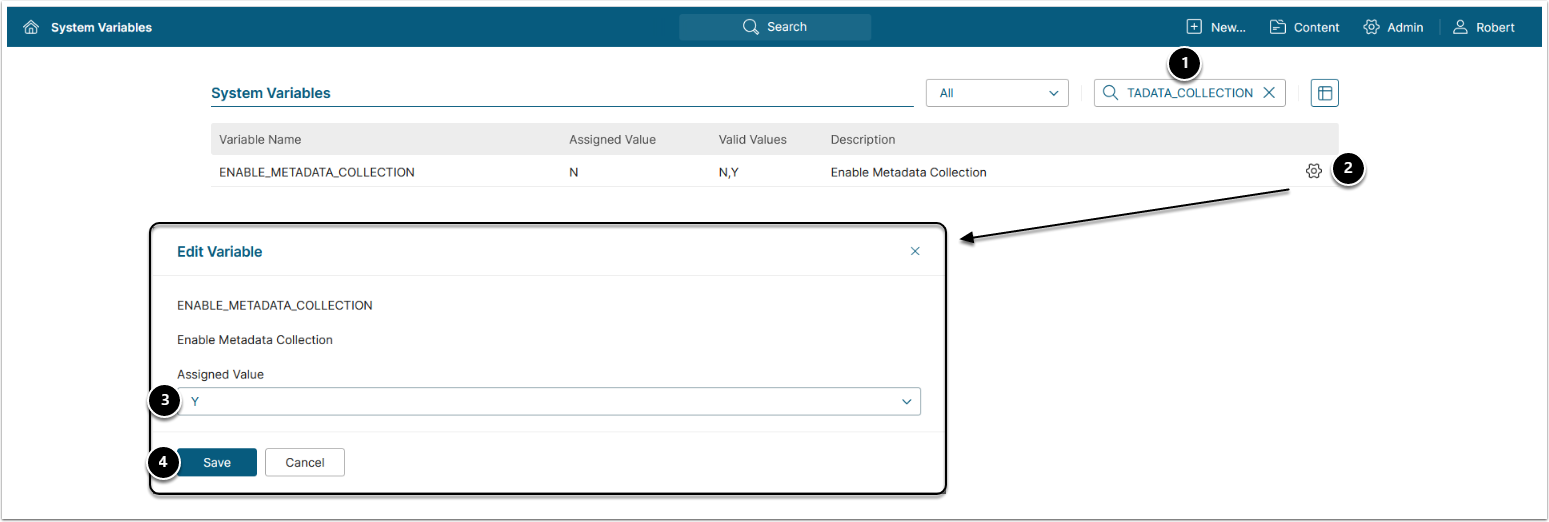
- Enter
ENABLE_METADATA_COLLECTIONin the search field - Click the gear icon
- Assigned Value:
Y - [Save], then [Commit Changes]
NOTE: See Setting System Variables for information on System Variables configuration.
2. Enable Metadata Collection with Log Analytics
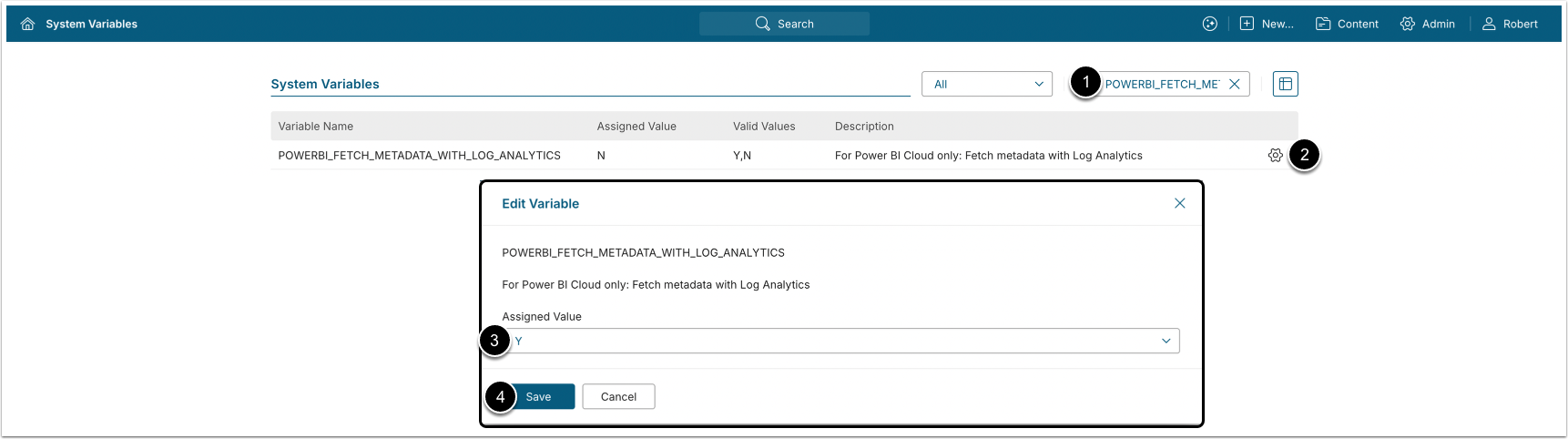
- Enter
POWERBI_FETCH_METADATA_WITH_LOG_ANALYTICSin the search field. - Click the gear icon.
- Assigned Value:
Y. - [Save], then [Commit Changes]
3. Configure Power BI Cloud Data Source in Metric Insights
3.1. Create a Microsoft Power BI Cloud Data Source
See the instructions on creating a new Microsoft Power BI Cloud Data Source for your Metric Insights version:
3.2. Configure Auth Parameters
Proceed with the Data Source parameters configuration based on the selected Auth Type:
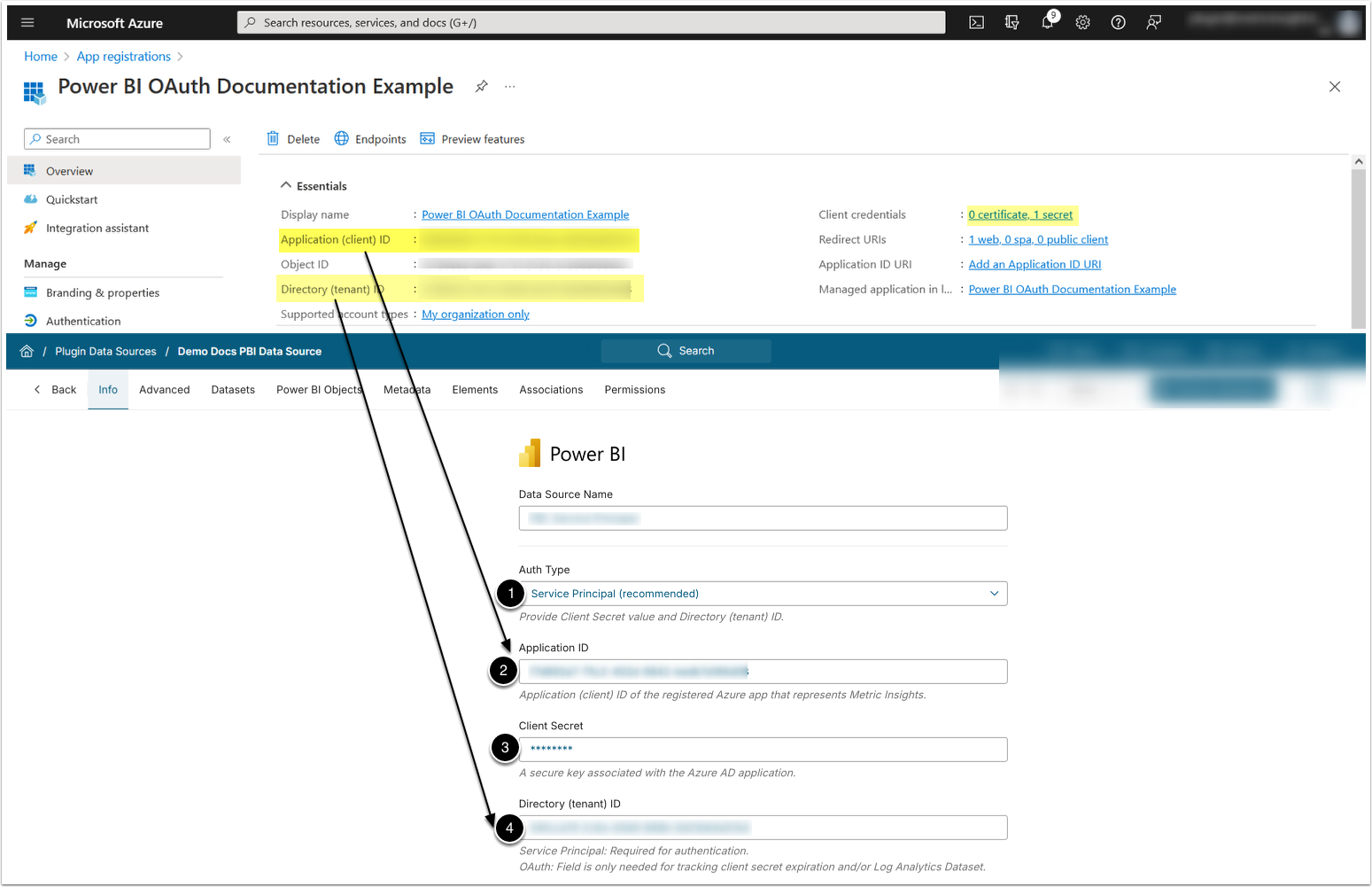
- Auth Type: Service Principal.
- Application ID: Enter the Application (client) ID of the Azure application.
- Client Secret: Enter the Client Secret Value of the Azure application.
- Directory (tenant) Id: Enter Directory (tenant) Id of the the Azure application.
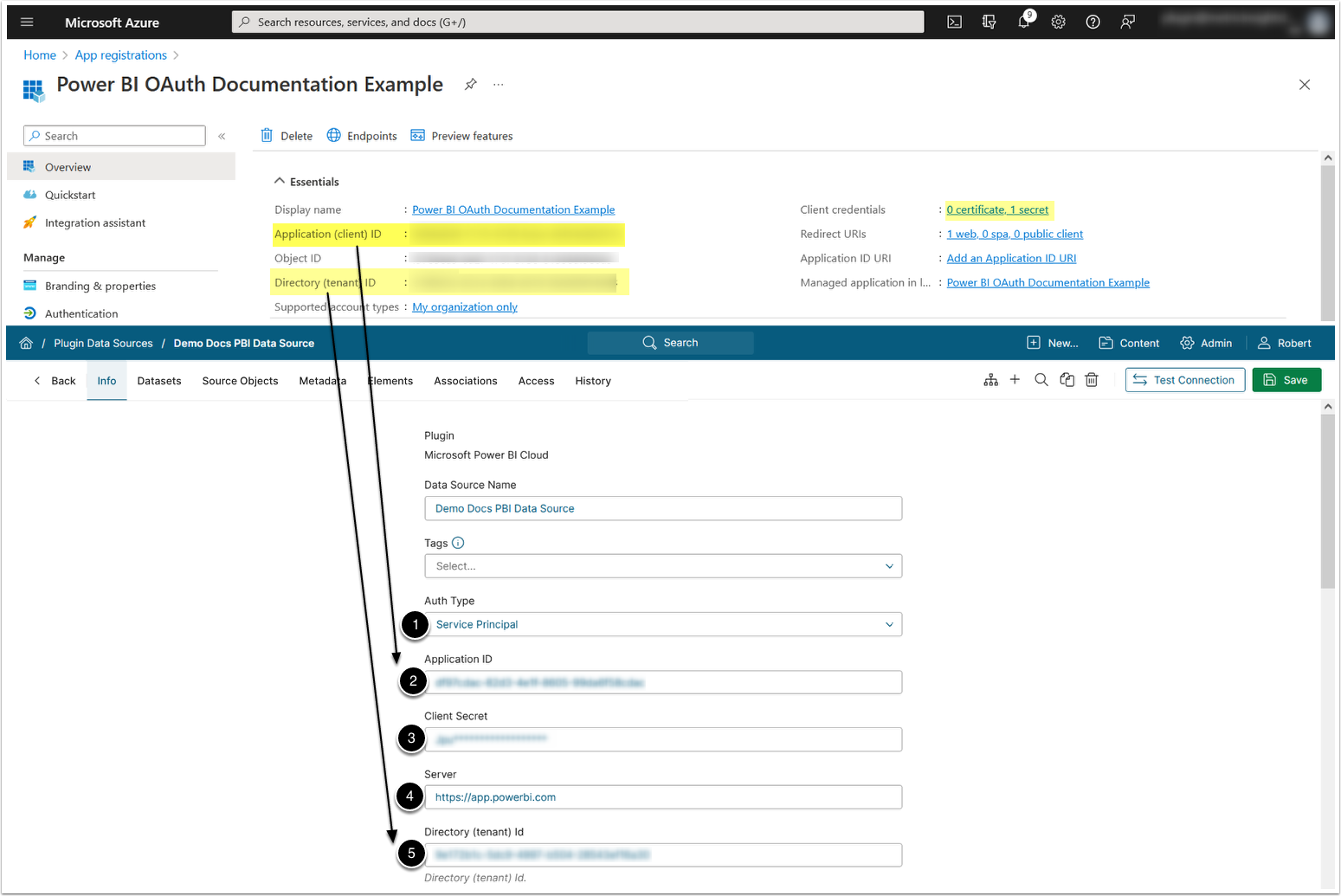
- Auth Type: Service Principal.
- Application ID: Enter the Application (client) ID of the Azure application.
- Client Secret: Enter the Client Secret Value of the Azure application.
- Server:
https://app.powerbi.com. - Directory (tenant) Id: Enter Directory (tenant) Id of the the Azure application.
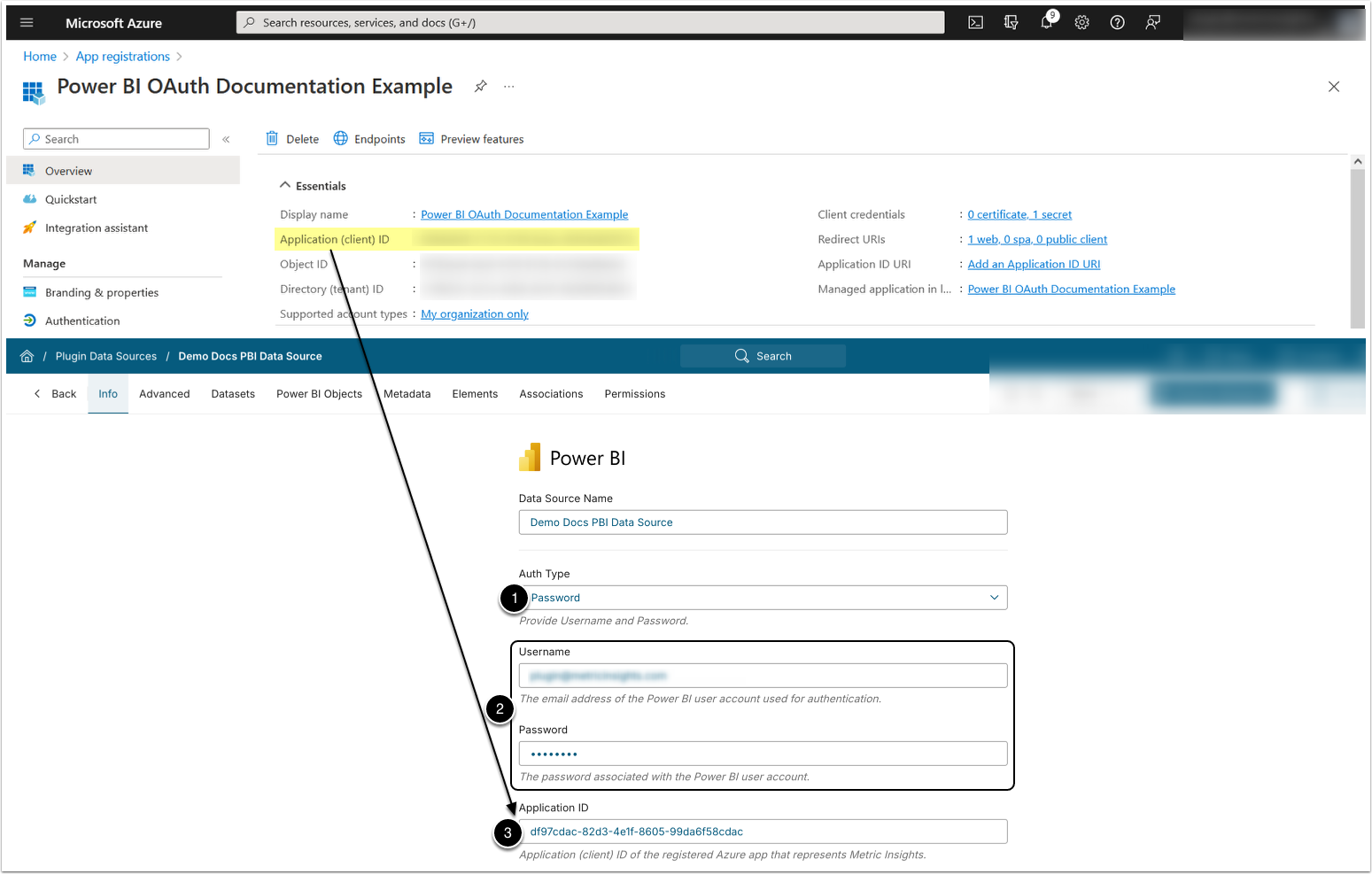
- Auth Type: Password.
- Username, Plugin Password: Enter the credentials of a Fabric Administrator user.
- Application ID: Enter the Application (client) ID of the Azure application.
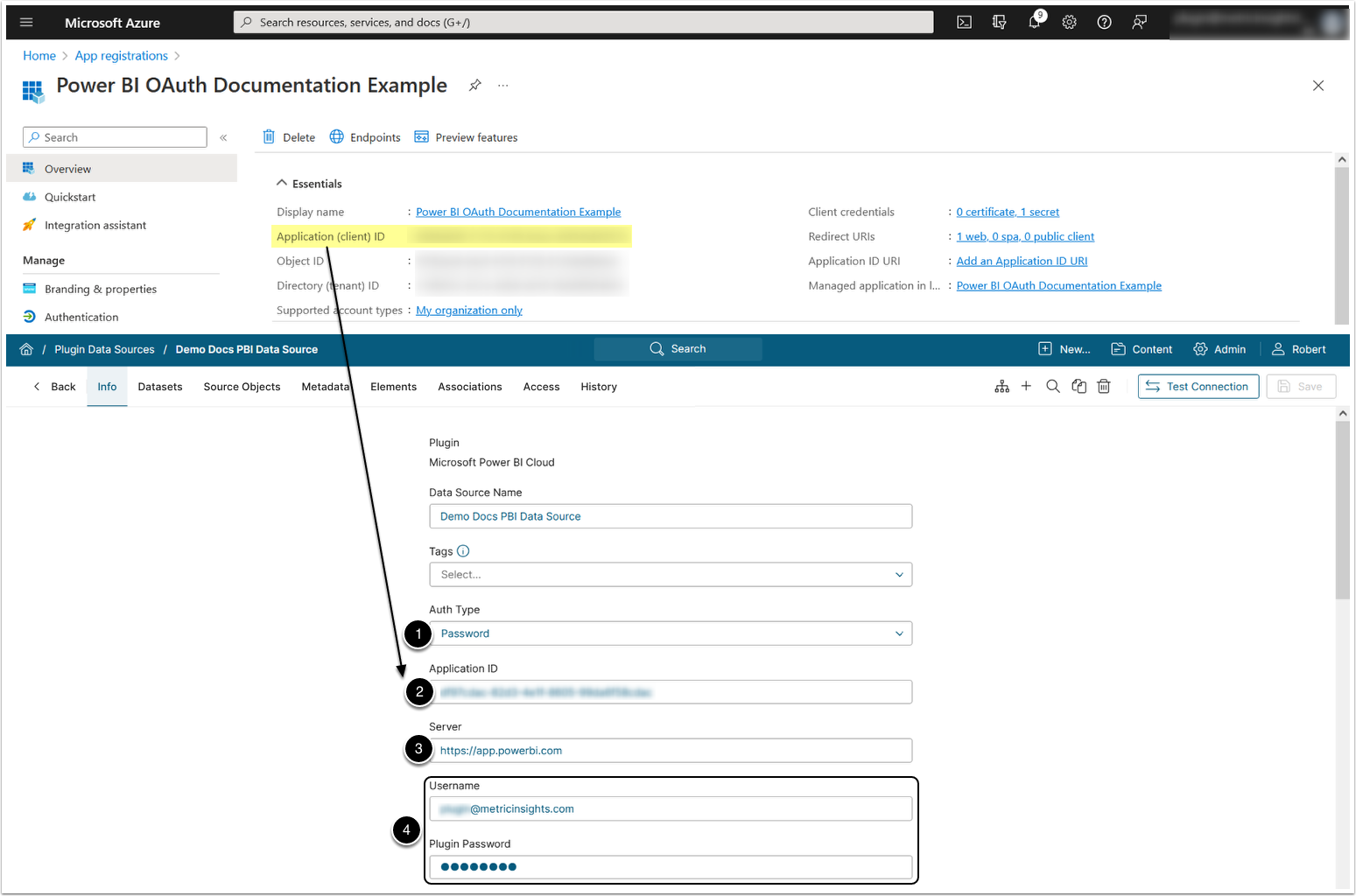
- Auth Type: Password.
- Application ID: Enter the Application (client) ID of the Azure application.
- Server:
https://app.powerbi.com. - Username, Plugin Password: Enter the credentials of a Fabric Administrator user.
NOTE: Lineage collection with Log Analytics does not work with Client Secret authentication. Only Application ID, Directory (tenant) Id and the credentials of a Fabric Administrator user are required.
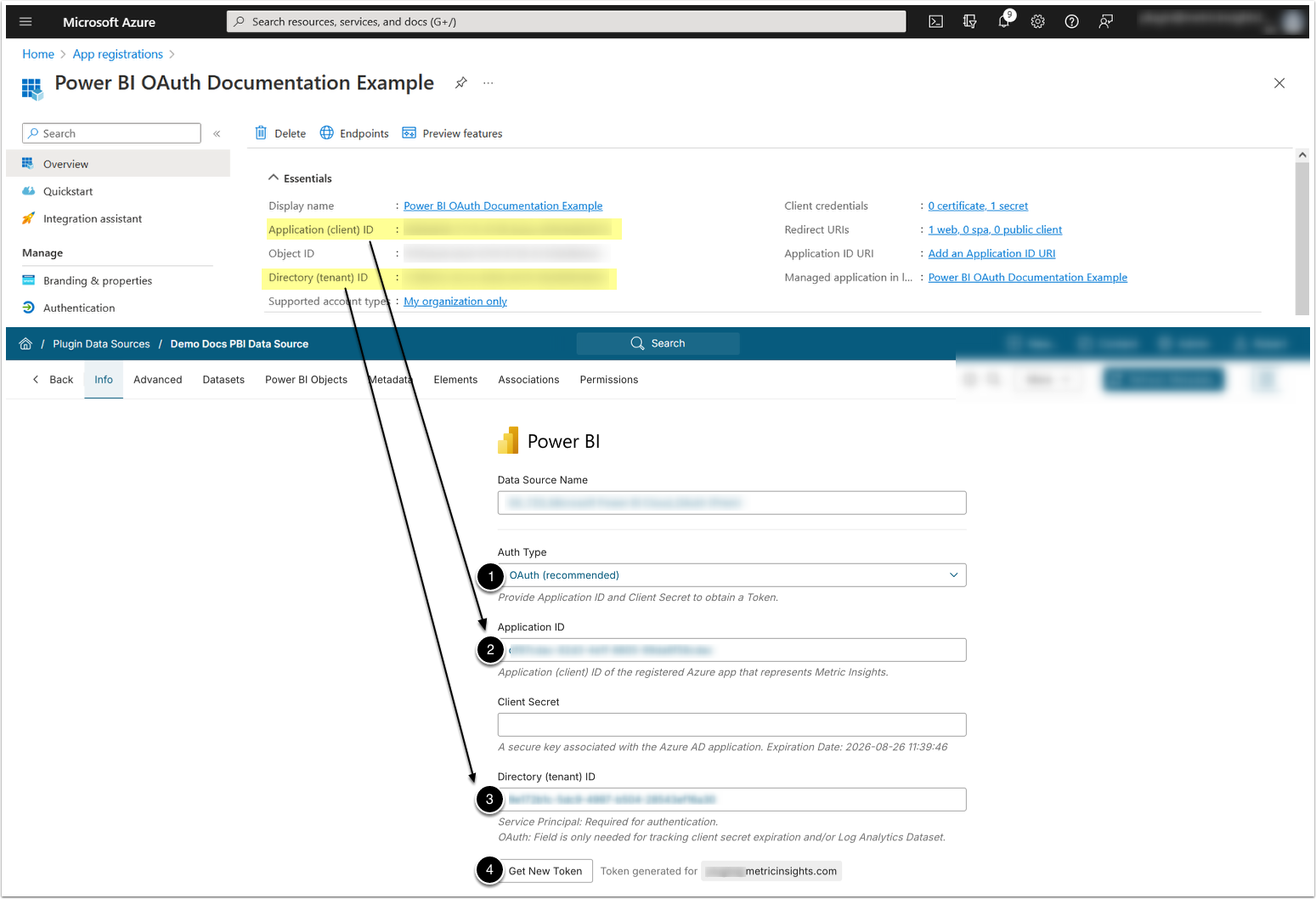
- Auth Type: OAuth.
- Application ID: Enter Application (client) ID of the Azure application.
- Directory (tenant) Id: Enter Directory (tenant) Id of the of the Azure application.
- [Get Token], enter credentials of a Fabric Administrator in the pop-up window.
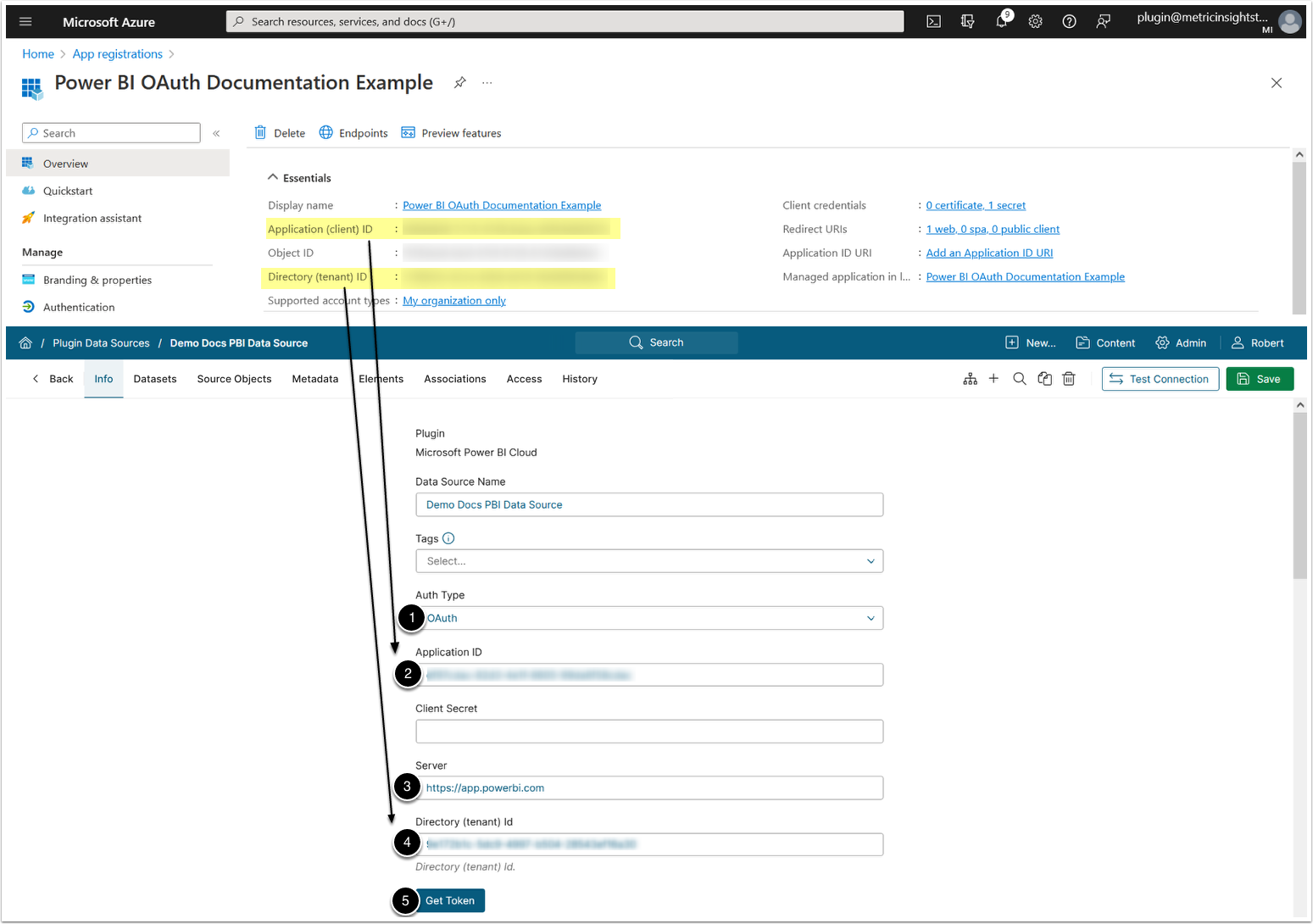
- Auth Type: OAuth.
- Application ID: Enter Application (client) ID of the Azure application.
- Server:
https://app.powerbi.com. - Directory (tenant) Id: Enter Directory (tenant) Id of the of the Azure application.
- [Get Token], enter credentials of a Fabric Administrator in the pop-up window.
3.3. Configure Other Data Source Parameters
See parameter configuration details specific to your MI version:
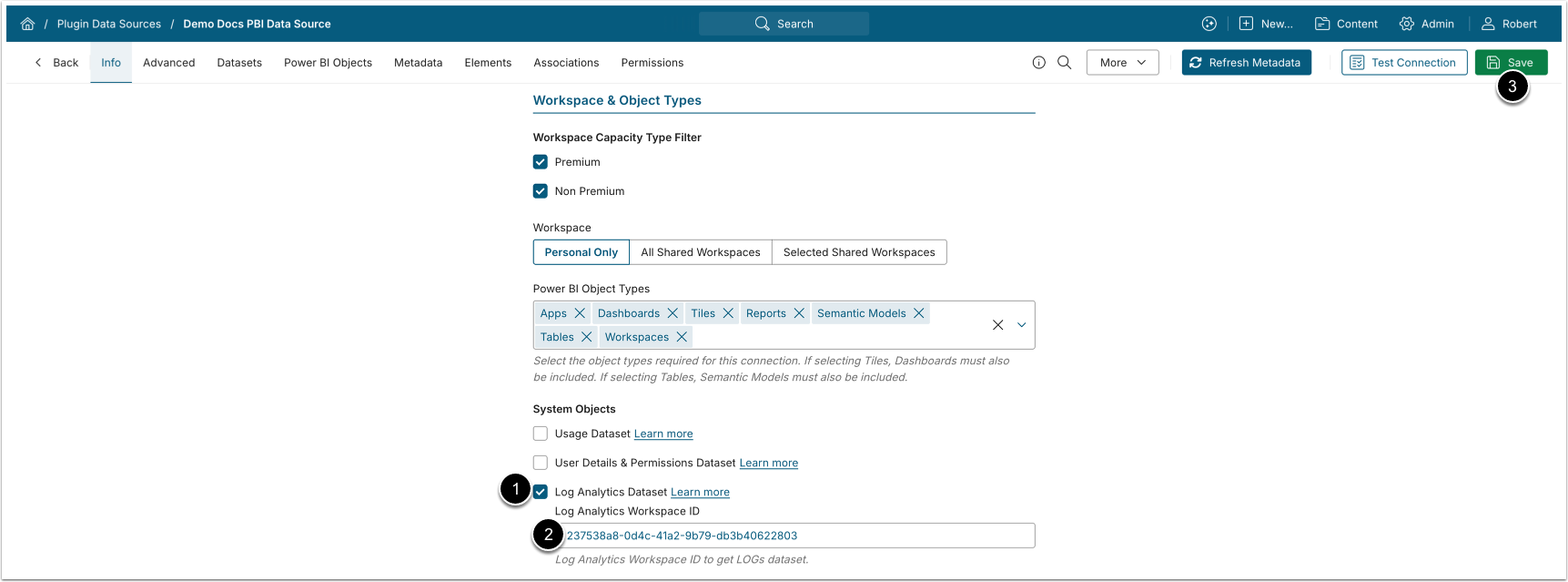
- Power BI Object Types must include Dashboards and Reports.
- Select Log Analytics Dataset.
- Log Analytics Workspace ID: Enter the ID of the previously configured Log Analytics Workspace.
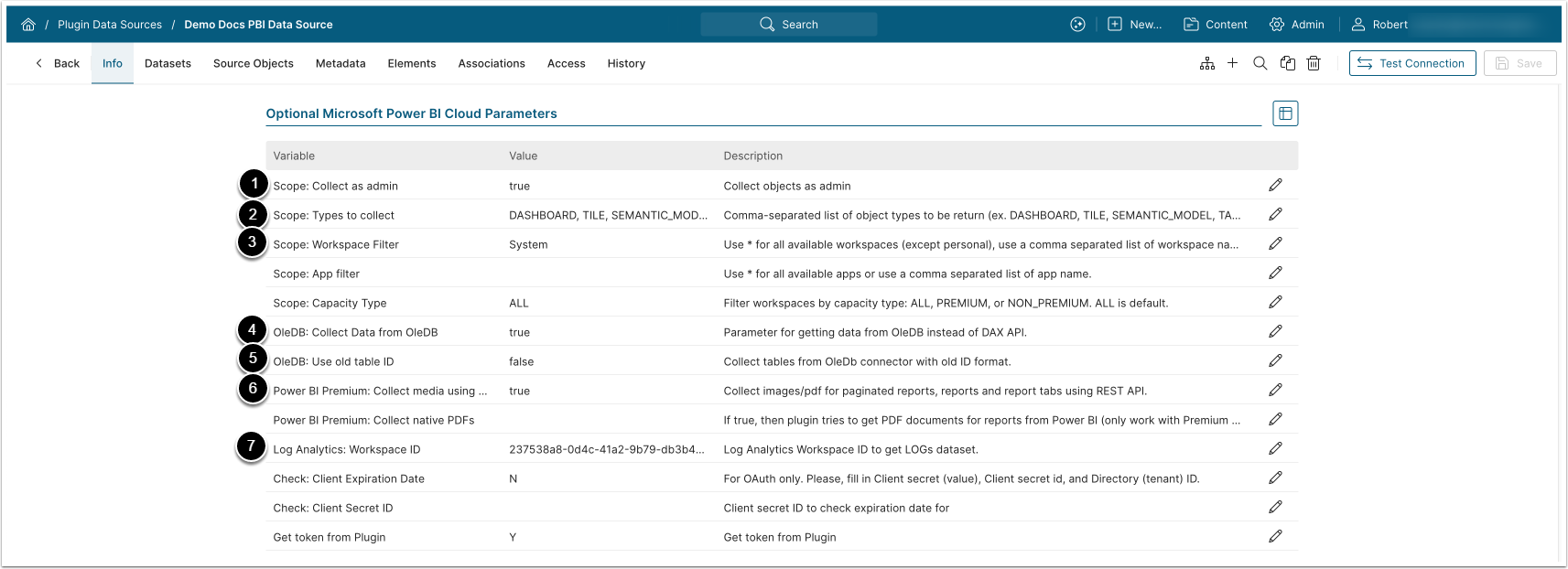
| Parameter Name | Value | |
| 1 | Scope: Types to collect | Must include DASHBOARD, REPORT, LOG. |
| 2 | Log Analytics: Workspace ID | The ID of the previously configured Log
Analytics Workspace |
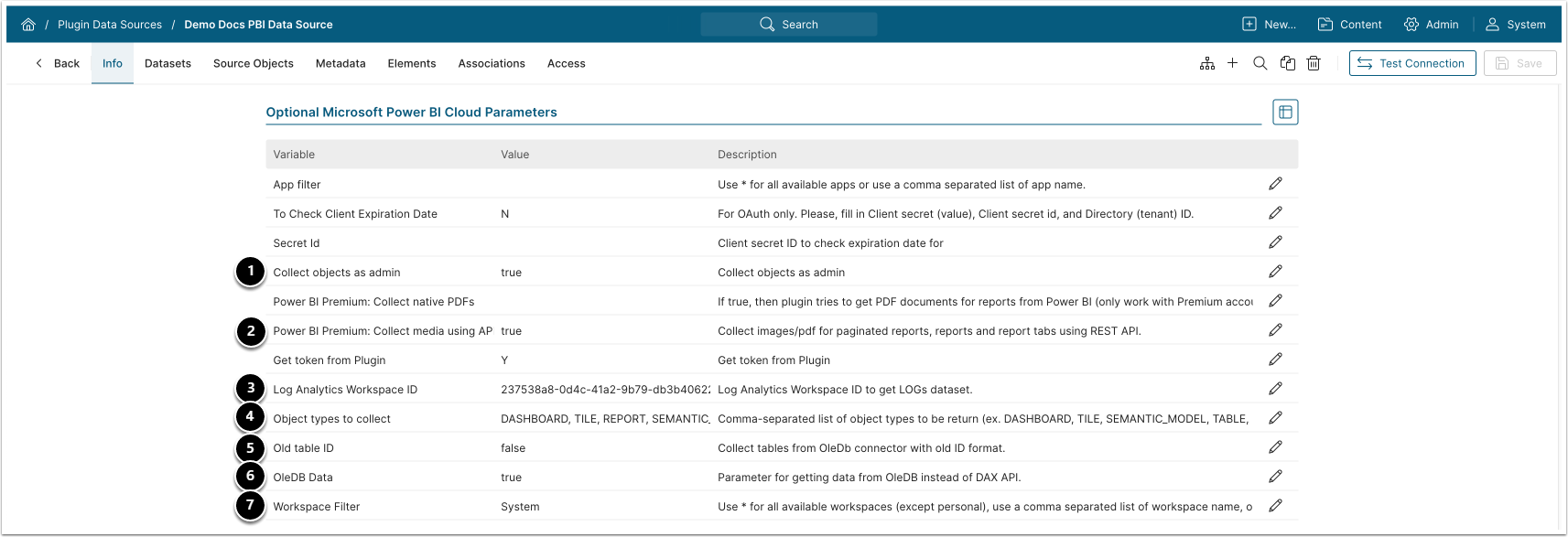
| Parameter Name | Value | |
|---|---|---|
| 1 | Log Analytics Workspace ID | The ID of the previously configured Log Analytics Workspace |
| 2 | Object types to collect | Must include DASHBOARD, REPORT, LOG. |
3.4. Configure Object List Refresh
3.4.1. Manually Refresh Object List
Access Source Objects tab
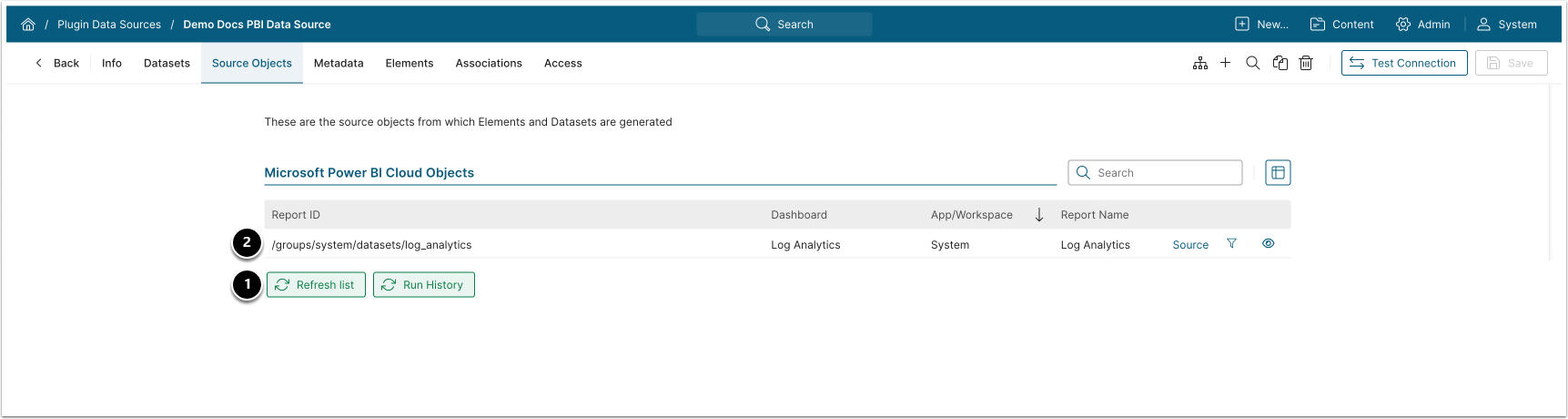
- [Refresh list]
- Once the list is refreshed, the Log Analytics object is displayed.
3.4.2. Add Object List Refresh Trigger
Adding an Object List Refresh Trigger allows to automatically refresh the Object List at the configured time interval.
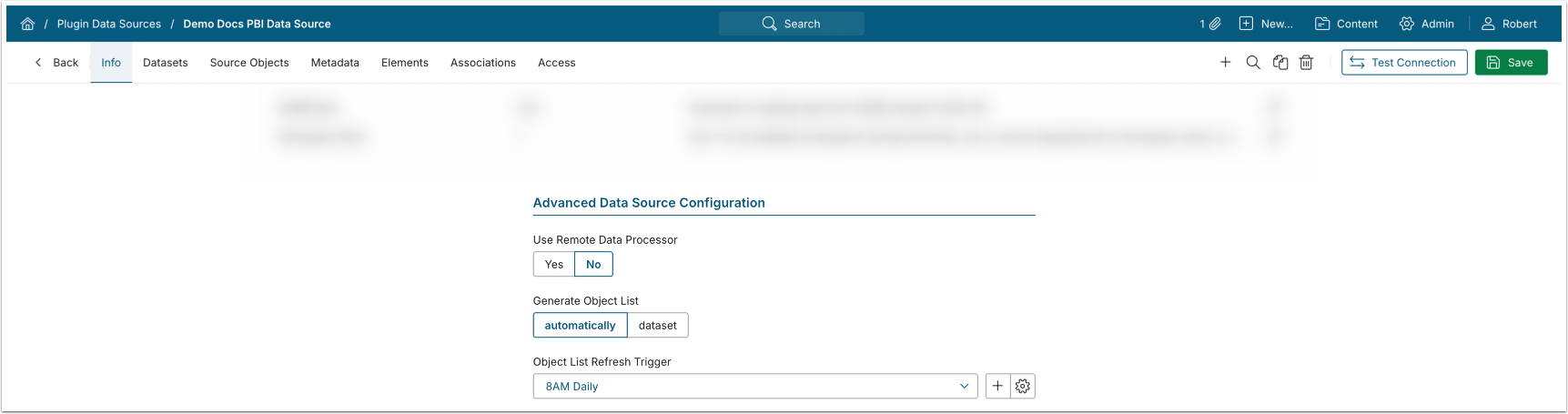
- Generate Object List: automatically.
- Object List Refresh Trigger: Select a daily Trigger.
- See What is Data Collection Trigger? for details.
3.5. Sync Metadata
NOTE: Metadata sync is not related to the previously configured Object List Refresh Trigger and needs to be updated manually on the regular basis.
See instructions on syncing Metadata for your MI version:
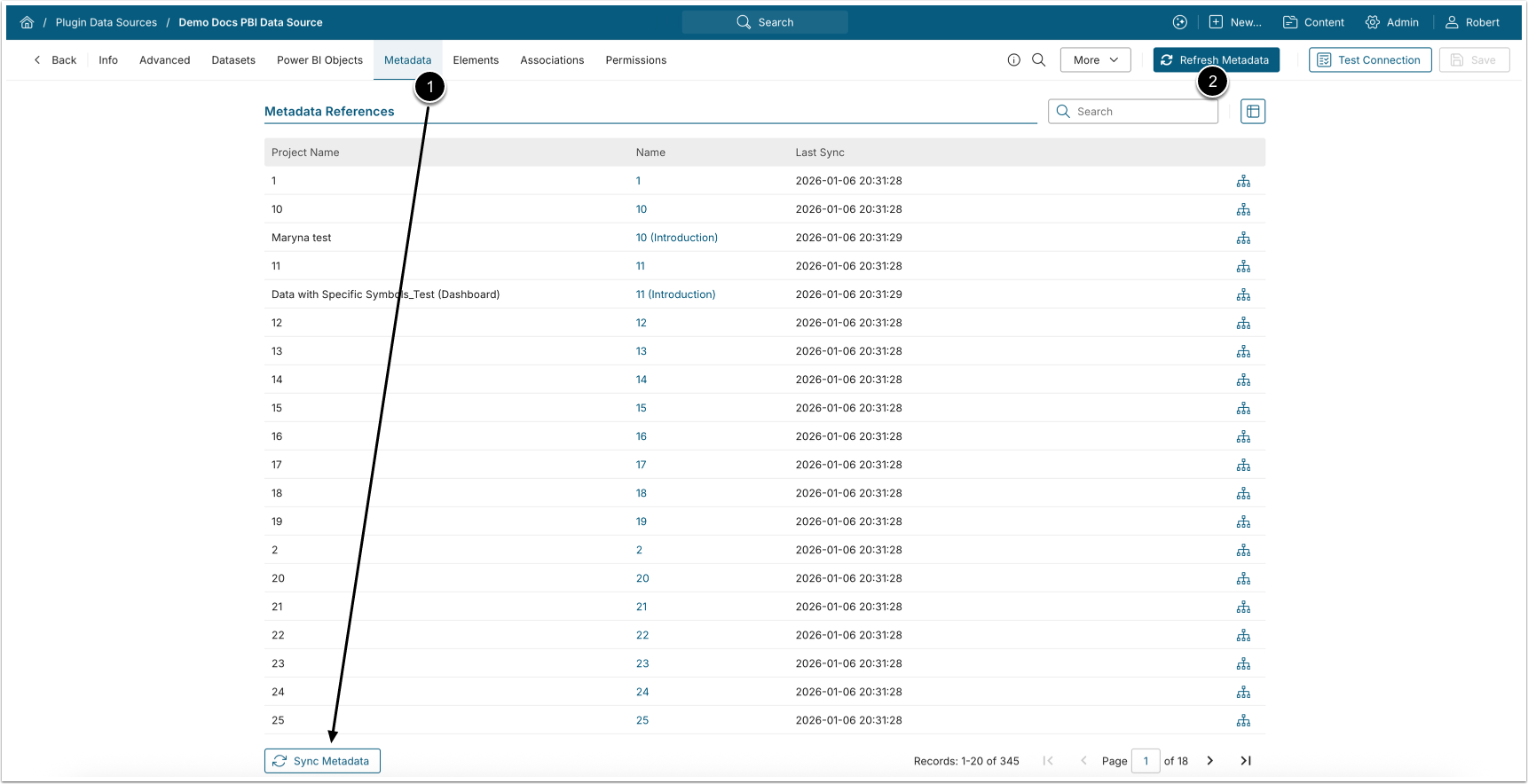
Beginning in v7.2.0, Metadata can be synced from either of the following locations:
- From the Metadata tab: click [Sync Metadata]
- From any tab in the Plugin Data Source Editor: click [Refresh Metadata] in the top panel.
Access Metadata tab
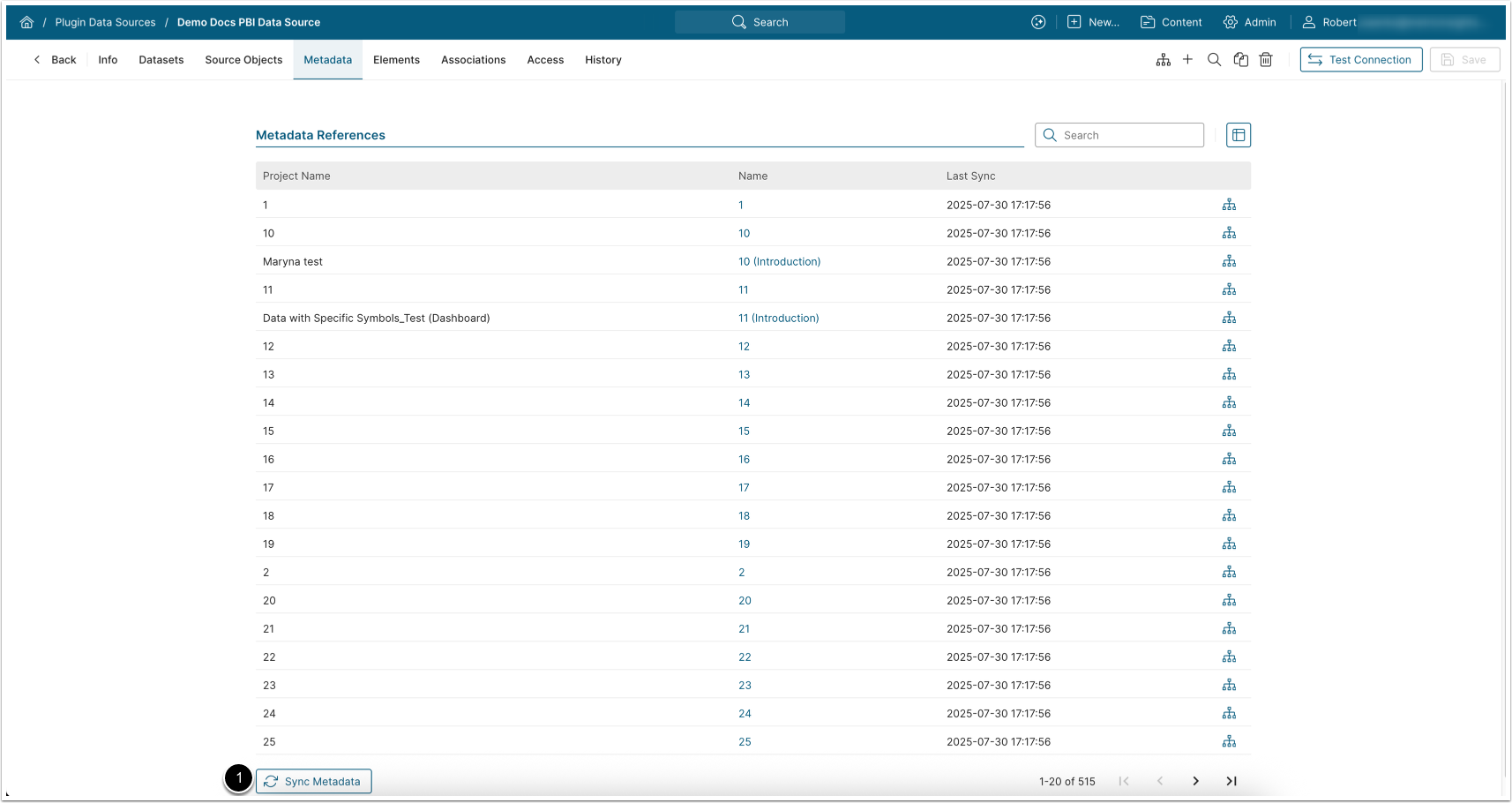
- [Sync Metadata]